Showing posts with label History of South Africa. Show all posts

Sunday, July 27, 2014

Days 75-76: More on South Africa's History

Yesterday I read more on South Africa’s history (http://en.wikipedia.org/wiki/South_Africa#History), but didn’t get to upload a blog because we went on a day trip and didn’t get home until really late. We went to Santa Cruz and walked on the Ocean Boardwalk. It was CRAZY crowded! So, today I’m finishing up my mini-history of South Africa:

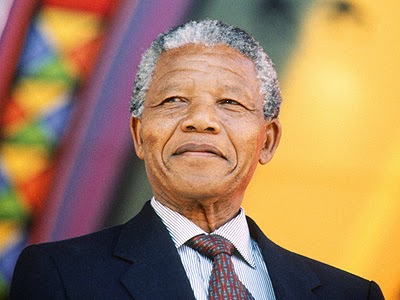
In 1961, South Africa became a republic following a referendum, and Queen Elizabeth II was stripped of the title of queen of South Africa. Despite internal and external opposition, apartheid continued and resistance movements were harshly oppressed. Violence became widespread as apartheid became increasingly controversial, and many Western nations began to boycott doing business with South Africa. In 1990, the National Party government took steps towards ending discrimination when it lifted the ban on the African National Congress (ANC) and released Nelson Mandela from prison after twenty-seven years. After negotiation, the government repealed apartheid legislation, and in 1994, Africa held its first universal elections, which the ANC won by overwhelming majority. Nelson Mandela was elected as Africa’s first black president. (As many of you may know, he died in December of last year). South Africa then rejoined the Commonwealth of Nations. Post-apartheid, South Africa struggles with unemployment and poverty, although recent violence has not been as widespread as initially feared.

Nelson Mandela

Happy Sunday, everyone! More tomorrow!

Xoxo,

Diana

Friday, July 25, 2014

Day 74 – A Turmoiled History

Today I’m going to begin discussing the history of South Africa. (http://en.wikipedia.org/wiki/South_Africa#History). South Africa has a very long history of human habitation – it contains some of the oldest human fossil sites in the world. The Bantu-speaking people had settlements in Africa from the fourth or fifth century BC, and this was the dominant ethnic group in South Africa at the time of initial European contact.

The first European voyage to land in Southern Africa was in 1487, but it was not until 1652 that what would become Cape Town was established on behalf of the Dutch East India Company. In 1795, Great Britain took over the Cape of Good Hope. Conflicts between the native and European peoples in the area continued for several decades into the 19th century. The discovery of diamonds and gold in the late 19th century intensified the European-South Africans’ struggle to control the indigenous people, and led to the Boer Wars, which ended in 1902. In 1909, the British Parliament granted nominal independence and created the Union of South Africa on May 31, 1910. In 1931, the United Kingdom passed the Statute of Westminster, making South Africa fully sovereign and independent from the British government.

In 1948, the racial segregation begun by the Dutch and British colonial rule was strengthened under the National Party. The South African people were legally segregated in what was known as apartheid. Although the minority, the whites enjoyed a high standard of living and controlled the black majority. The black majority suffered disadvantage in every area, including income, education, housing, and life expectancy. In 1955, the Freedom Charter, demanding a nonracial society and end to discrimination, was adopted by the Congress Alliance. More on that tomorrow!


Xoxo,

Diana